
By Taryn Mayer
I sat down with Dr. Jackie Glazier, Associate Professor of Clarinet in the School of Music, to talk about the Watershed Soundscape project that began last year, spearheaded by Dr. Sara Fraker, Associate Professor of Oboe.
Essentially, this project all began with Dr. Fraker’s interest in the Watershed Management Group, which is a “Tucson based non-profit organization providing education, restoration, and policy leadership to protect and restore local watersheds.” Dr. Fraker was particular interested in the work that this organization has been doing to restore Tucson’s perennial flows, which essentially means restoring our water channels to the point where they are flowing year-round, which is a beautiful vision indeed. Collaborators from all backgrounds have become part of the project, most notably including Dr. Jacelle Ramon-Sauberon from Tohono O’odham Community College, who ensured the project had a strong Indigenous voice, Dr. Larry Fisher, Research Professor in the School of Natural Resources and the Environment, and Alison Hawthorne Deming, Creative Writing professor emeritus.
This collaboration ended up becoming two commissioned pieces — “Sonoran Rivers”, composed by Dr. Yuanyuan (Kay) He, which was heard last year by over 19,000 people and played by a consortium of over 900 musicians in both youth and community ensembles all over Tucson, and “Resonancia Natural”, composed by Carolina Heredia, and presented by Dr. Fraker (oboe), Dr. Glazier (clarinet) and Dr. Marissa Olegario (bassoon), with video art by Heather Bird Harris and created with the ecological recordings, local soils and native plant inks.
In order to be sure that the project stayed grounded in science, Dr. Fraker and Dr. Glazier enlisted the help of UA researchers Larry Fisher (Environmental Sciences) and Neha Gupta (Hydrology). They also read published work on watershed management and preservation science, and ensured that the composers were also well-versed in the science. Dr. He based her composition off text from Alison Hawthorne Deming, as well as incorporating data that mapped the flow of our local creeks. “She took those numbers and built this really amazing system by which you could input the numbers and then map them onto different harmonic series,” Dr. Glazier said. Carolina Heredia also had an interesting process and based her compositions on recordings from acoustic ecologists, which were provided thanks to a grant from the Center of National Scientific Research in France. Heredia then translated these recordings into music.

Resonancia Natural by Carolina Heredia performed at the Watershed by Sara Fraker (oboe) and Jackie Glazier (clarinet)
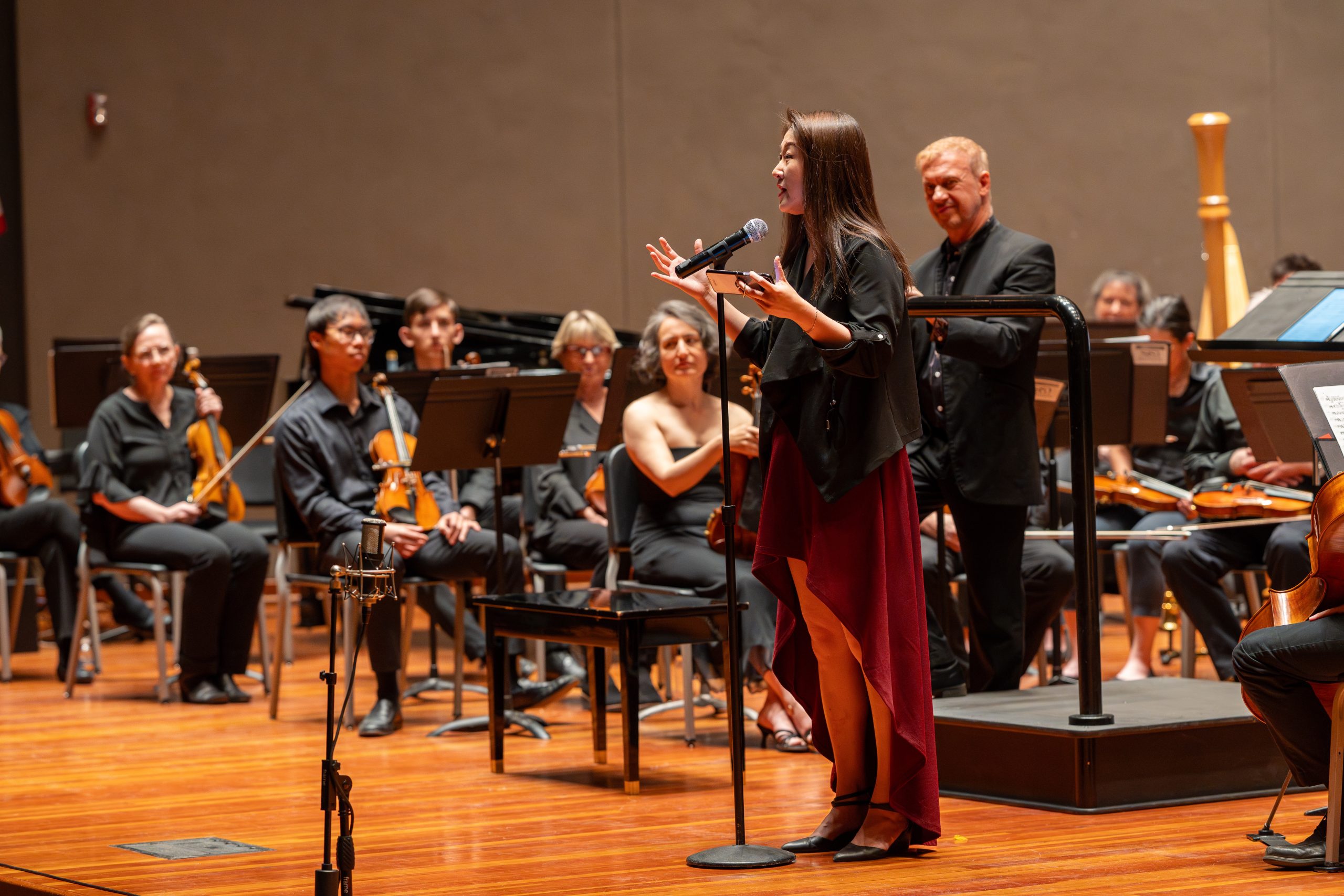
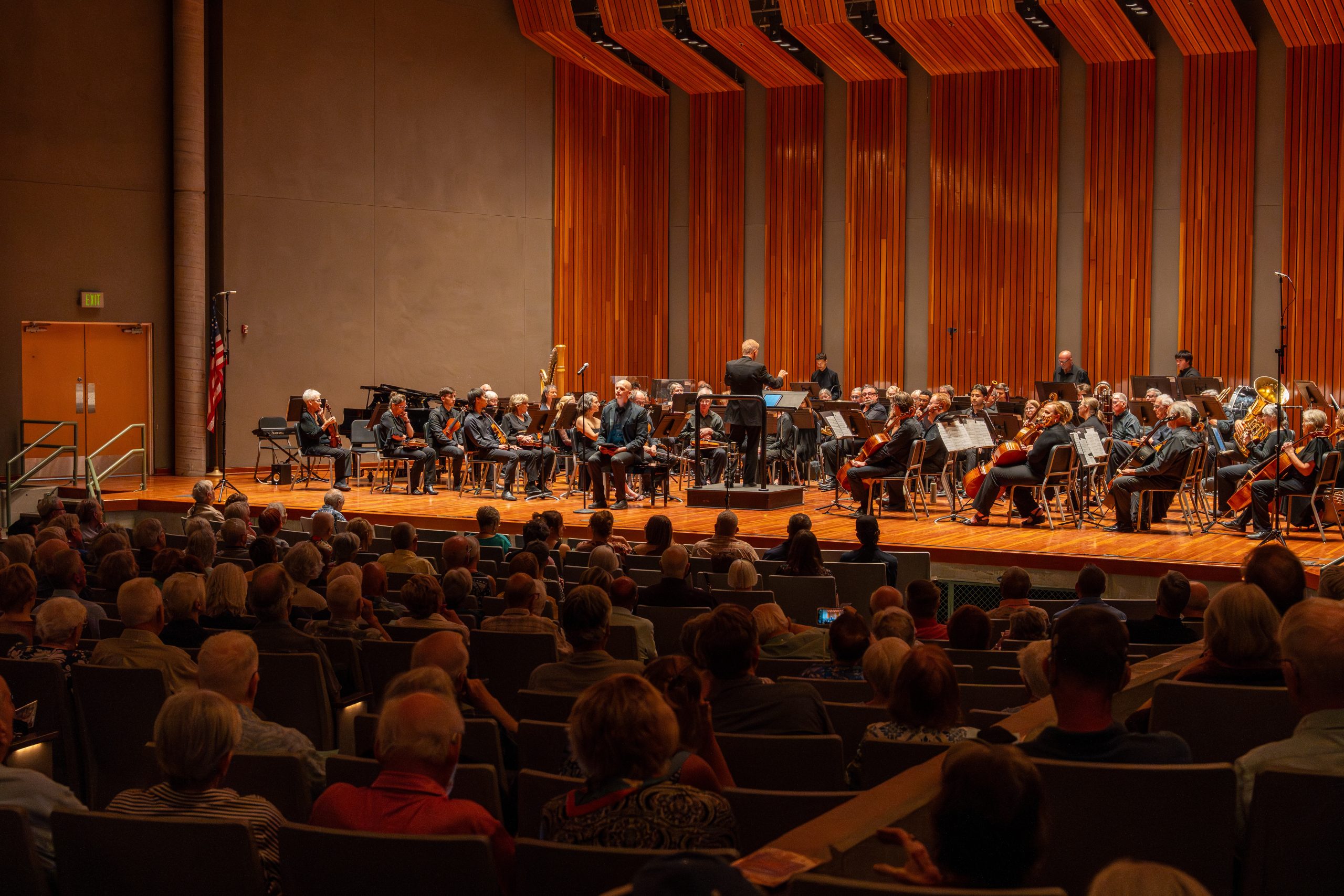
Dr. Kay He introducing “Sonoran Rivers” performed by the Southern Arizona Symphony Orchestra
I asked Dr. Glazier about the importance of working on an interdisciplinary team and she said, “I think it’s always really interesting when you’re working with people from different disciplines, because they bring a completely different perspective. For example, in this project, one of the key components ended up being this large ensemble work that was performed by a consortium of ensembles, including youth ensembles. And that idea actually came from Larry Fisher, who’s one of our science collaborators. He had proposed it, and we were like, well, that’s not going to work. Like, nobody’s done that. That’s not really what we do. And then we thought about it and we said, why not? I think that’s where the beauty happens in the interdisciplinary collaboration, is that it allows both sides to really think outside of their normal discipline and what is normal inside of our discipline.”

The Tucson Pops Orchestra
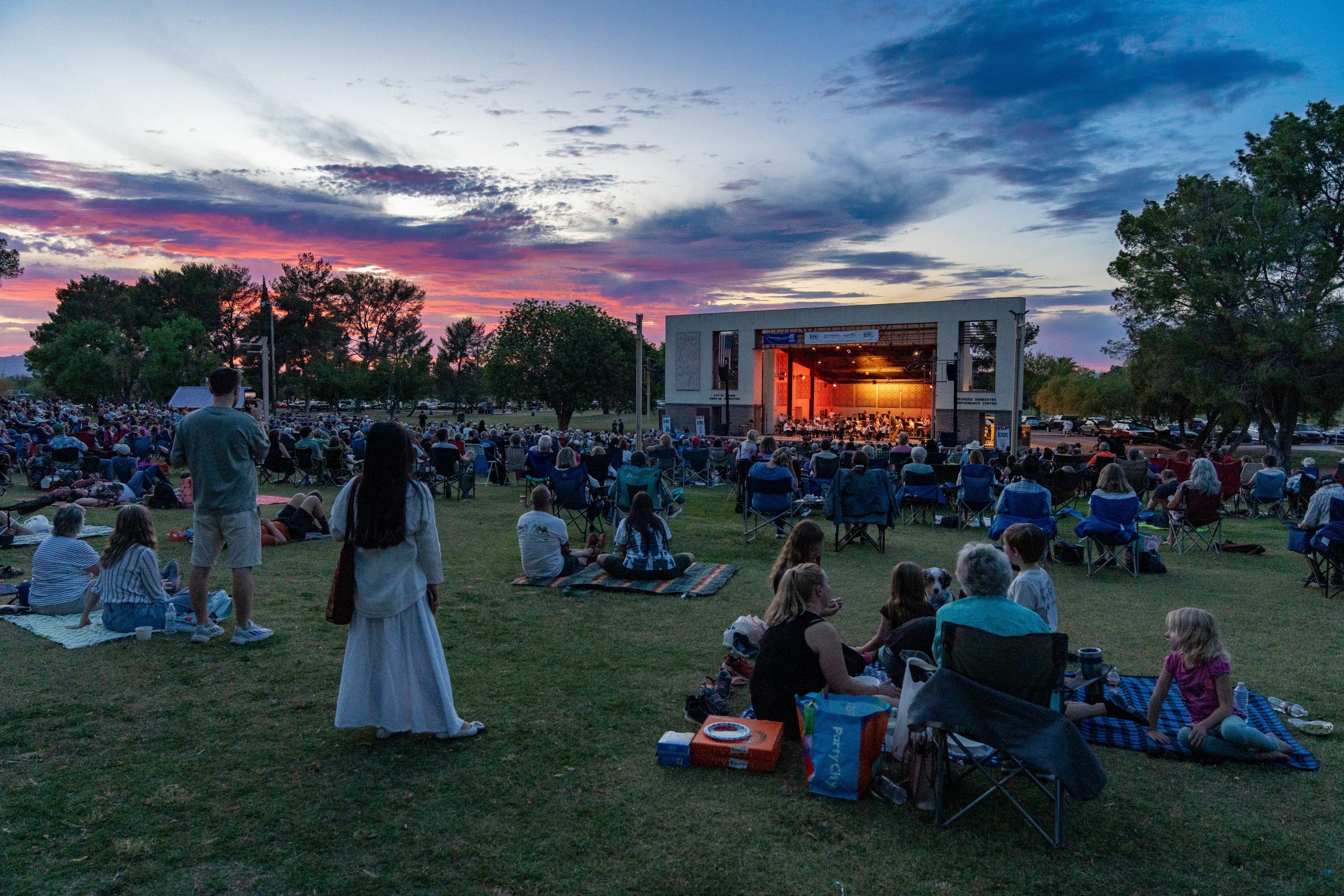
The Tucson Pops Orchestra performing “Sonoran Rivers” by Dr. Kay He
Learn more about the project at https://air.arizona.edu/watershedsoundscape.