
Undergraduate Research Opportunities
Here at the School of Music, we have multiple ways for students to get involved in interdisciplinary research.
Vertically Integrated Projects (VIP)
A VIP is a multidisciplinary, team-based learning model designed to transform higher education by engaging undergraduates in faculty-led research project teams. In VIP, teams of undergraduate students — from various years, disciplines, and backgrounds — work with faculty and graduate students in their areas of scholarship and exploration. Undergraduate students earn academic credit or pay for their work and have direct experience with the innovation process, while faculty and graduate students benefit from the extended efforts of their teams.
Learn more, and find a team, here: https://uavip.arizona.edu/
Teams in the School of Music include Creative Wellbeing: Arts, Culture & Health led by Dr. Jennie Gubner (pre-req: MUS 429/529) and StellarScape led by Dr. Kay He.
Learn more about both of these projects below.
Course-Based Research Undergraduate Experiences (CUREs)
Course-based Undergraduate Research Experiences (CUREs) are courses specifically designed for first-year, second-year, or transfer students looking to gain an authentic research experience right away. Many CURE classes have no prerequisites! CUREs take a research question based on a faculty member’s field of study that requires many people to complete the data collection and analysis. Students in a CURE class participate in this project, helping to move novel research questions forward and advance our understanding in that field.
Some benefits of CUREs include:
- They look great on a resume/CV
- They can help students determine if a particular research field is right for them
- Skills developed in CUREs can establish the necessary relationships and trajectory to be competitive for future research opportunities
Faculty interested in developing a CURE can visit this page for more information or email impact@arizona.edu with any questions about developing CUREs.

Music students interested in community engagement, arts and health, ethnomusicology, storytelling, creative aging, or applied research are invited to explore the Creative Wellbeing VIP: Arts, Culture & Health team.
Through this Vertically Integrated Project, students can participate in ongoing community-based initiatives or propose new individual or group projects connected to creativity, culture, health, and wellbeing. For music students, this is an opportunity to apply artistic, cultural, and research skills beyond the classroom while engaging with Tucson communities in meaningful, hands-on ways.
Current project areas include:
La Peña del SurCo
La Peña del SurCo is a monthly Latin American folk music gathering that promotes intergenerational wellbeing, cultural connection, and community belonging in Tucson.
Students may support the project through event organization, promotion, photo and video documentation, participant interviews, field notes, and materials for the project website.
This project may be especially meaningful for students interested in Latin American music, ethnomusicology, community music, arts administration, event planning, cultural work, or public-facing scholarship.
Learn more at elsurcotucson.com.
Music & Health Story Lab
The Music & Health Story Lab invites students to explore relationships between music, health, and wellbeing through culturally diverse digital storytelling.
Students may contribute through interviews, poetry, filmmaking, photo essays, audio/video editing, and digital story production.
This project is a strong fit for students interested in music and wellness, documentary work, songwriting or poetry, multimedia storytelling, qualitative research, or arts-based research.
Note: Participation in this subproject requires prior enrollment in MUS 429/529: Music, Health & Wellness Story Lab.
Creative Aging Practicum
The Creative Aging Practicum explores how creativity supports healthy aging through engagement with older adults at Armory Park Senior Center and other community settings.
Students may assist with existing creative aging programs, help develop new creative engagement opportunities, or document stories about creativity, music, aging, and wellbeing.
This project may appeal to students interested in music education, music therapy-adjacent work, community arts, gerontology, creative programming, storytelling, or intergenerational engagement.
What Students Can Gain
Depending on their interests and chosen project area, students may gain experience in:
- Community-engaged arts practice
- Ethnomusicological fieldwork
- Qualitative and arts-based research
- Practice as research and artistic inquiry
- Public-facing scholarship
- Event support and community organizing
- Audio, video, and photo documentation
- Digital storytelling and website materials
- Intergenerational and intercultural engagement
The Creative Wellbeing VIP is open to students from all majors, but music students bring valuable skills as performers, listeners, collaborators, researchers, educators, and cultural workers. Whether your interests are artistic, scholarly, community-based, healthcare-adjacent, or interdisciplinary, this team offers a way to connect music study with real-world questions of care, belonging, and wellbeing.
Areas of Interest
This VIP may be a good fit for students interested in:
- Arts and health
- Music and wellbeing
- Creative aging
- Latin American music and culture
- Ethnomusicology
- Storytelling
- Arts-based research
- Community-engaged research
- Public scholarship
- Applied Intercultural Arts Research
- Audio/video documentation
- Cultural studies
- Health humanities
- Community music
How to Join
Students interested in joining the Creative Wellbeing VIP should complete the VIP Interest Form and select:
“Creative Wellbeing: Arts, Culture & Health.”
The team accepts students at the start of each semester and may offer participation options for both academic credit and federal work-study.
To learn more about the program, eligibility, and the application process, visit the University of Arizona VIP website at uavip.arizona.edu.
Team Advisor
Jennie Gubner, PhD
Image credits: Peña photos by Chris Zatarain. Creative Aging Practicum collage artwork by Gene Slape.
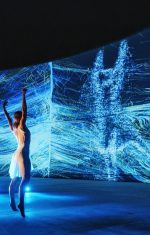
Music students interested in composition, performance, technology, immersive media, interdisciplinary collaboration, or arts-based research are invited to explore the StellarScape VIP.
StellarScape is an immersive multimedia project that brings together music, astronomy, visual art, dance, sensor technology, and interactive performance. Through this Vertically Integrated Project, students collaborate across disciplines to help create performances and installations that transform scientific concepts and astrophysical data into visceral artistic experiences.
For music students, StellarScape offers a unique opportunity to apply musical training in a highly collaborative, technology-forward environment. Students may contribute as performers, composers, creative collaborators, researchers, production assistants, media artists, or project organizers while working alongside peers and faculty from music, astronomy, dance, information science, research technologies, and related fields.
About the Project
StellarScape explores the relationship between the arts, sciences, and human experience through live music, electronic music, dance, interactive cinematography, sensor-enhanced engagement, and cosmic simulation.
The project invites audiences to become active participants in immersive performances that connect the beauty and mystery of nature with scientific data and artistic interpretation. Through this work, students gain experience in the creative and technical processes behind large-scale interdisciplinary performance.
StellarScape is a collaboration between the University of Arizona School of Music, Department of Astronomy, School of Dance, School of Information, and U of A Research Technologies.
What Music Students Can Do
Depending on their interests and the needs of the project, music students may have opportunities to engage with:
- Music composition
- Live performance
- Electronic music
- Sound design
- Multimedia performance
- Sensor-enhanced performance
- Interactive technologies
- Stage and production design
- Event management
- Arts administration
- Audience engagement
- Documentation and media support
- Interdisciplinary research and collaboration
This VIP may be especially meaningful for students who want to explore how music can interact with technology, science, movement, visual media, and immersive environments.
Areas of Interest
The StellarScape VIP may be a strong fit for students interested in:
- Music composition
- Music performance
- Electronic and computer music
- Technology in the performing arts
- Sensor technology
- Interactive media
- Immersive performance and installation
- Data sonification or data mapping
- Data visualization
- Astronomy and science communication
- Dance and choreography
- Stage design
- Media art
- User interface and human-computer interaction
- Event management
- Marketing and arts administration
- Interdisciplinary collaboration
Student Experience
Students who join StellarScape can gain hands-on experience working on a collaborative creative research project with real-world performance and public engagement components.
This project is open to students from all majors, and music students bring essential perspectives as performers, composers, listeners, interpreters, and creative problem-solvers. Whether your strengths are artistic, technical, organizational, or research-based, StellarScape offers a space to contribute to a project that connects music with some of the most expansive questions in science and human imagination.
How to Join
Students interested in joining the StellarScape VIP should complete the VIP Interest Form and select:
“StellarScape.”
To learn more about the program, eligibility, and the application process, visit the University of Arizona VIP website at uavip.arizona.edu.
Students can also learn more about the project at stellarscape.org.
Team Advisors
Yuanyuan “Kay” He, DMA
Chris Impey, PhD
Winslow Burleson, PhD
Hayley Meier, MFA
Gustavo Almeida, PhD
Peter A. Torpey, PhD
MUS4/529 (variable units): Music, Health, and Wellness Story Lab
Instructor: Dr. Jennie Gubner (jgubner@arizona.edu)
Description: How can music promote health and wellness in our lives and communities across the lifespan? For years, ethnomusicologists have been studying music around the world as a form of healing and a vehicle for community building and identity formation. One of the most important ways ethnomusicologists do research is by learning directly with and from individuals and communities through interviews, observant participation, and thoughtful engagement in communities of practice. In this interdisciplinary, hands-on, fieldwork course, we will explore the relationship between music and health through the creation of collaborative, community-based digital storytelling projects. Working in teams, students in this course will meet with individuals from diverse backgrounds from in and beyond the Tucson area to learn about their musical preferences and practices, document their musical life stories, and work to map the musical spaces and activities that have brought and continue to bring meaning, wellness, and health to their lives. To raise awareness about how music can be used to build and strengthen healthy communities, the stories students gather will be collected and shared as a growing creative toolkit to be shared with community members and healthcare providers. No prerequisites.
Instructor: Dr. Brian Luce (bluce@arizona.edu)
Description: As a flute performer, we have the power to communicate a diverse array of emotions and aesthetics to all audiences. Arizona Flute Performance studies at the 4-credit level trains performers to increase their musical impact through live performances, stereo and immersive audio recordings, 2D and VR video content generation, and through the integration of kinesiological, medical, engineering, and neurological research. Students are encouraged to create integrated projects that will benefit performers in health and wellness, increase music learning effectiveness through psychoacoustic and kinesiological pedagogies, and improve listeners’ enjoyment through research on the impact of sound on human well-being at any age.
This course is open to all students. This course fulfills Music Individual Studies requirements for the Bachelor of Music and Bachelor of Arts in Music. This course may be used to fulfill credit requirements for the Minor in Music. Master class and technique seminar attendance is required while individual lessons are individually arranged directly with the professor. Successful completion is by faculty jury. Prerequisites include: Audition and permission of instructor; or successful completion of MUSI 181 or MUSI 182 by faculty jury.